HOW TO TECHNICAL GUIDE
Vibratory Tumbler – The Fast & Effective Way to Polish Small Motor Parts
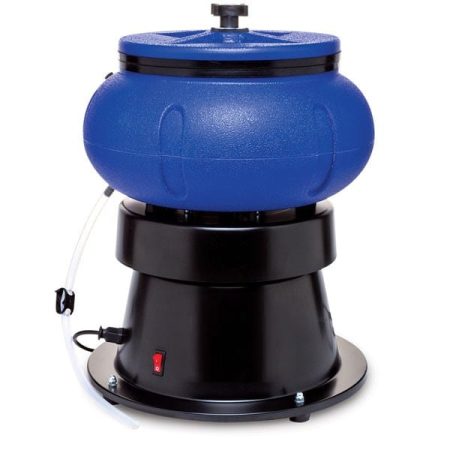
The Vibratory Tumbler is a compact machine, which is designed to polish small metal objects and other items with a rapid vibrating action. By gently tumbling the objects from bottom to top and from centre to the outside edges, it works better and faster than a rotary tumbler in polishing the surface without changing the shape of the items.
Now you can also do this at home using DIY Vibratory Tumbler – available at Frost Auto Restoration Techniques (www.frost.co.uk). It’s a simple design with a small vibrating machine and a heavy duty polymer bowl which mounts on top of it. This Vibratory Tumbler is perfect for deburring, cleaning or polishing materials of various types using either wet or dry polishing media (see below for more information on the media that can be used).
The Vibratory Tumbler’s drum opening is 10.5 inches in diameter, so it allows the easy addition or removal of items up to 10 inches long. The bowl can take up to 8 kilos of parts and media, and it rests on rubber mounted feet for added stability when operating.
Bringing new life to many nuts, bolts and car parts is so easy!
How to operate the Vibratory Tumbler
Step 1: Pre-clean and degrease items to remove oil and dirt.
Step 2: Fill the Tumbler Bowl about 2/3 full with polishing media. Various media are available for different jobs. Select the appropriate media and running time for the objects you wish to clean, deburr or polish. To remove rust, use Ceramic Triangles which are good for edges and holes. This gives a dull finish. To de-burr or polish, you can use either Plastic Cones, Walnut Shell or Porcelain Cylinder (see Types of Media for further information)
Step 3: Add work material parts to Vibratory Tumbler and cover the bowl. Do not over fill the Tumbler Bowl and do not exceed work weight limit of 8 kilos including media. Always do a test run on a few pieces of work material to test the media and running time before committing to a specific process. You can also add the Frost Vibro Liquid to clean and degrease old grimy hardware up to 50% faster.
Step 4: When the job is completed, you should wait at least 1 hour before opening the cover to allow the dust to settle. Vibratory polishers often use dry media that is light and dusty. If a lubricant is used, then the Drain Hose must be used to drain out any excess lubricant/water into a suitable container, preventing overflow.
Step 5: Check the work material to determine if the job is completed to your satisfaction. Repeat the process if required. If the work is completed, pour the media and parts from the bowl onto newspaper or a towel, remove the parts and dry them with a heat lamp or a hair dryer to avoid flash rust. Allow the wet media to air dry for future re-use.
Types of media

Pre Polish Plastic Cones (1kg)
Plastic cones are fairly aggressive, but they can give a bright finish. They can be used on aluminium, brass and plastics. They are recommended for general metal removal, pre-painted or pre-plated finishing, polishing, and fast and heavy cutting.
They will produce a very smooth finish, but very little shine. Plastic media is used for soft metals (brass and aluminium) or stringy materials to produce a better surface finish and to avoid rolling the burr over into a hole. This is also good for preparing parts for anodising, and the triangles are good for corners and flats. Plastic media gives the best surface quality. It does not discolour metal and does not peen over burrs. Plus, it’s 30% lighter than ceramic media.
Compound: Use dry or with Vibro Liquid / water solution.

Ceramic Triangles (1kg)
Ceramic media is best for heavy cutting and hard metals, (iron and steel). It is better at supporting very heavy parts than plastic media. Fine threads or a hanging burr can be peened over by ceramic media, whereas plastic media won’t peen. When a small media is required, ceramic media offer the best selection.
Compound: Use dry or with Vibro Liquid / water solution.

Porcelain Angle Cut Cylinder (1kg)
Porcelain media gives minimum abrasion and is used for the finishing process.
Compound: Use dry or with Vibro Liquid / water solution.

Walnut Shell (1kg)
Walnut shells are ground into various grit sizes to be used for cleaning and polishing. This is ideal for tumble polishing of metals such as aluminium, bronze and brass. Walnut shells are extremely durable, angular and multi-faceted, yet considered a soft abrasive.
Compound: Use dry