10 MUST-HAVE Restoration Tools

10 MUST-HAVE Restoration Tools1

Share This Post

(Words and Photos: Jon Hill, Classic Ford Magazine, October 2015 issue – Edited by Frost Auto)

Repairing rotten bodywork? These are the best tools to make the job easier.

1. Joggler

Joining panels edge to edge involves precise cutting out, coupled with practise and technique to weld them together; avoiding distortion and buckling metal.

But there’s a much easier way, using a joggling tool, which puts a step into the panel you’re joining; the thickness of the piece you’re letting in – allowing the new metal to sit flush whilst, strengthening the joint minimising distortion.

Use with seam welding or plug welding.

No products were found matching your selection.

2. Hole Punch Set

Plug welding is great for replicating spot welds and for creating relatively quick joints minimising distortion, where two pieces lap over each other.

What’s required is drilling a system of holes around 4-6 mm diameter in one piece so you can spot-MIG weld to the other.

But it’s a pain drilling them – easier, is a hole punch, which can be combined with a joggler – better are the air powered versions, which quickly punch the holes out.

  • Joggler / Joddle / Flanger with Hole Punch
    F355

    Joggler / Joddler Edge Setter / Flanger with Hole Punch

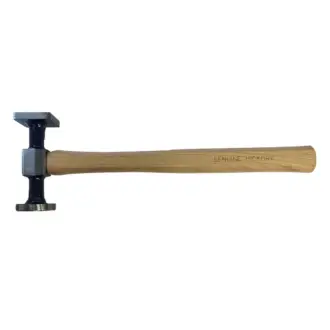
3. Shrinking Disc or Shrinking Hammer

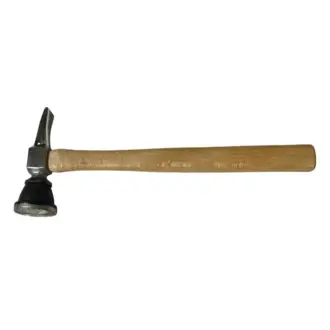
Shrinking hammer – An interesting idea but does it work? We took a sample along to professional restoration workshops and they immediately placed their orders.

“The only shrinking hammer I’ve tried that actually works.” was the comment of one experienced body man.

The spirally milled face of the hammer is mounted with vulcanised rubber against an angled adaptor. Upon impact the head grips the surface and twists causing the metal to shrink.

This unique tool will prove to be a boon to anyone in panel forming or repair.

  • Power-TEC 14oz Shrinking Hammer
    92596

    14oz Shrinking Hammer

  • Shrinking Hammer
    91216

    14.8oz Shrinking Hammer

4. Vice-mounted V-brake

Folding sheet metal cleanly is hard unless you have the right tools…

Really handy is a V-brake-a pointed former, that pushes into another of the corresponding shape and, according to the profile, allows you to make certain sections; the most common of which is a 90-degree bend.

And one of the handiest and cheapest is the small vice-mounted devices that stick to the jaws with magnets.

Fantastic for making up small brackets…

No products were found matching your selection.

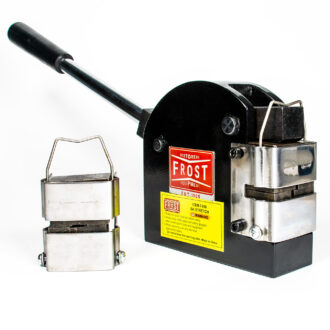
5. Shrinker/Stretcher

Stretched and shrunken metal is the cause of all dents and damage – getting them out is where the skill lies.

But you can make them work to your advantage – on right-angle sections, shrink/stretch one side and it’ll curve either way, allowing you to make for example a wheel arch lip.

However deliberately shrinking/stretching is hard unless you have a purpose made tool. Using a set of jaws for each, the shapes you can create are unreal!

  • Complete Heavy Duty Metal Shrinker & Stretcher
    Y219

    Complete Heavy Duty Metal Shrinker & Stretcher

  • FROST Shrinker / Stretcher Combo (1 Body, 2 Jaws)
    F450

    Shrinker / Stretcher Combo (1 Body, 2 Jaws)

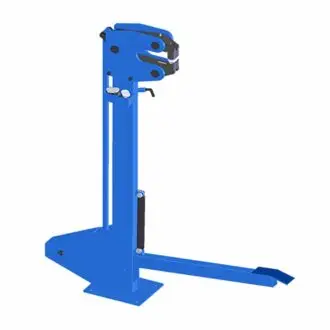
6. Bench-mounted metal folder

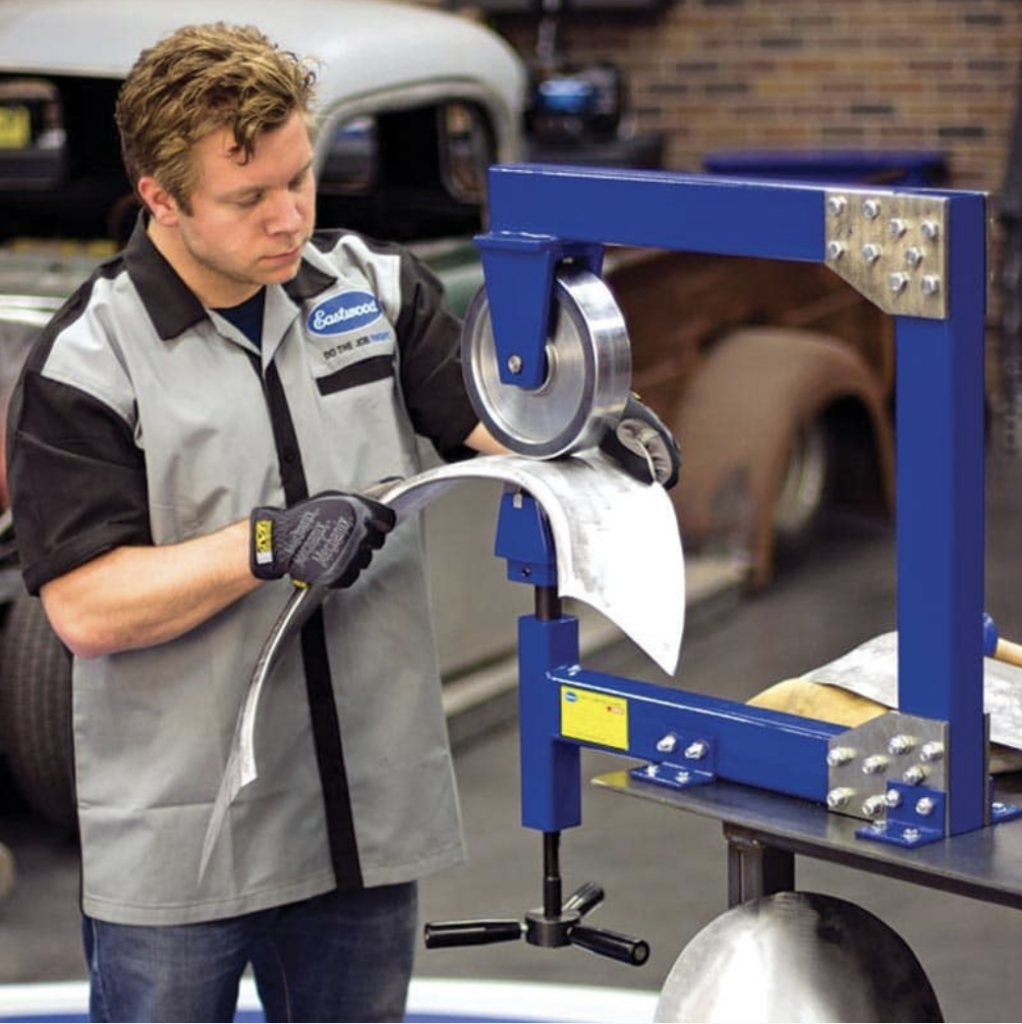
Restoration is about forming sheet metal. There will be a time when you want to bend a lip on a large sheet.

You can do it with vice-mounted bending bars combined with a body hammer but you do risk hammer marks, which can look ugly if it’s in a facing piece.

The answer to an extent is bench mounted folder, which cleanly forms the profile.

They’re great and relatively cheap, but they can be limited in use.

No products were found matching your selection.

7. Hammer and dolly set

The staple diet of restoration, a good body hammer and several profiles of dollies are invaluable.

You’ll find the one you use most is a toe dolly, but keep it clean and rust free, as like the face of your body hammer. If it’s covered in crap, it’ll transfer the contamination to the work in the form of annoying small dents.

We could go on about these tools for ever but buy the best you can and practice.

No products were found matching your selection.

8. Tin Shear

When it comes to sheers, I find traditional is best – aviation sheers and me aren’t friends.

I prefer a good set of Gilbows. They come in straight and angled left and right, big and small and you’ll find the size you need in use – sometimes, you just have to plunge in!

Keep them sharp and they’ll be the same as scissors slicing through sheet steel like cardboard.

No products were found matching your selection.

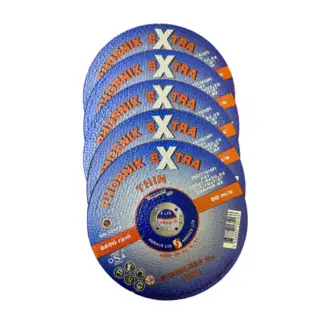
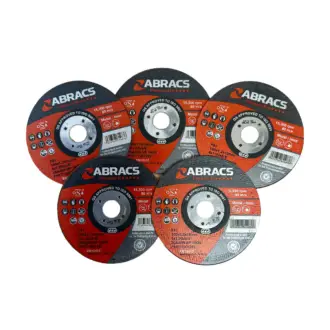
9. Cutting Discs (1mm)

One of the tools you’ll have in your hands always is an angle grinder as they’re so versatile.

But, the traditional cutting and grinding discs are massively thick removing a whopping great chunk of metal.

You can be delicate with a cutting disc if you use the thinnest you can – usually about 1 mm thick.

Buy the best you can and they’ll last but you’ll find you can cut precise slices where you couldn’t before.

  • ABRACS Large Extra Thin Cutting Blades - 5 Pack
    G148

    Large Extra Thin Cutting Blades – 5 Pack

  • ABRACS 100mm Phoenix 5 Star Extra Thin Cutting Disk - 5 pack
    D159

    100mm Phoenix 5 Star Extra Thin Cutting Disk – 5 pack

10. Cardboard

You don’t have to spend money on tools – sometime the cheapest item is the most useful.

Thick card – around 0.5–0.6mm – is brilliant for forming shapes and sticking them together; making profiles before you waste precious sheet steel.

I often make the lot in card; joining it together with either tabs and glue or more likely, masking tape; so that, once you’ve established the form, you can unpick it and transfer it to steel!

Note: To punch and flare holes similar to those in the picture, use a round hole punch followed by the matching hole flare. Just pick the size for your need and produce a stiff and professional result.

CHECK OUT OUR

WEEKLY WAREHOUSE SPECIALS

NEW DEALS ADDED EVERY WEEK! >>>

More to Explore

How Do I Use the Shrinking / Stretching Machine?

1. STRETCHING JAWS IN DETAIL The Frost stretching/ shrinking machine is a clamping device which, under the influence of the lever, will squeeze whichever jaws are mounted in it. The jaws can be swapped for different jobs. A bespoke stand is available, but it’s easy enough to bolt the machine body to a bench or

CONTINUE READING

MIG Welding Duty Cycles

(Words and Photos: By Louis Beaudreau, Eastwood.com, July 2014- Edited By Frost) MIG Welding Duty Cycles When you are using an arc welding machine, you will need to understand what its duty cycle is as it will help you preserve the life and quality of your tool. On this page, you will learn about what

CONTINUE READING
How to Tighten Up a Weld Seam on a Patch Panel1

How to Tighten Up a Weld Seam on a Patch Panel

No one’s perfect, but we can do our best to strive to get the closest we can get to perfection every day. These ideals are the same whether you’re a cook, a machinist, a landscaper, or a guy in his garage building an old car or motorcycle. One big lesson I’ve learned over the past

CONTINUE READING
Basket 0
RECENTLY VIEWED 0
Join Waitlist We will inform you when the product arrives in stock. Just leave your valid email address below.
Email Quantity We won't share your address with anybody else.
Added to wishlist!